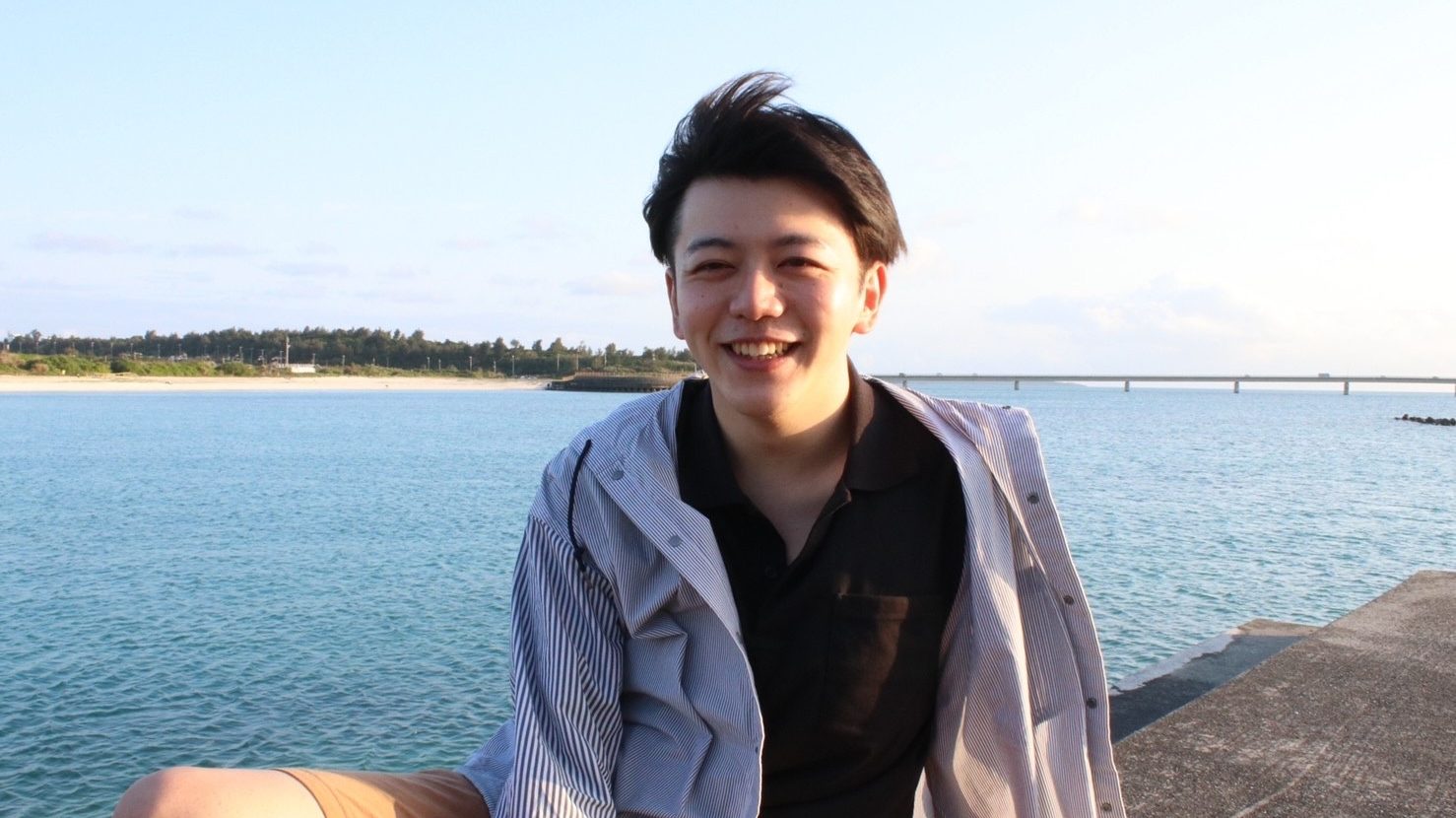
Akira Sawata
Akira is a doctoral candidate in Higher Education at the University of Minnesota–Twin Cities, with graduate training in anthropology and feminist and critical sexuality studies. Their work brings together the anthropology of education, critical university studies, international and comparative education, transnational feminist studies, and queer, trans, and crip theory.
At the center of his research is a question that is: How do educational institutions shape what kinds of futures people are able to imagine and inhabit? They study how universities construct the future through policies, institutional practices, built environments, public narratives, infrastructures, and everyday forms of feeling and interaction. He is especially interested in how these arrangements expand or constrain hope, possibility, and livability for people who have historically been marginalized.
Across their research, teaching, and public engagement, They aim to approach communities not simply as subjects of study, but as producers of knowledge, theory, and alternative ways of living. They see scholarship as a collaborative practice: a way of listening carefully, making complex ideas more accessible, and creating conversations across academic and community spaces.
Selected Research Projects

Queer and Trans* Future-Making in the Anti-DEI University
What happens to campus life and future when the infrastructures intended to support marginalized communities are dismantled?
Drawing on ethnographic fieldwork in the US, this project examines how anti-DEI policies reorganize university governance, institutional care, and the everyday lives of queer and trans folks I explore how people live within institutional collapse through survival, refusal, care, and practices of future-making. The project asks whose futures universities authorize, whose lives become difficult to sustain, and what forms of life emerge amid institutional unmaking.
Queer immigrants / International Students
and Transnational Institutional Care
What does the experience of migration mean to queer and trans* folks? What happens when the institutional systems divide support into categories that do not reflect how people actually live?
This project investigates how queer international students negotiate belonging, disclosure, mobility, identity, and support across national and institutional contexts. Based initially on research in Japanese universities and extended through work on international education and student support, it examines the gap between students’ intersectional lives and universities’ single-category systems of recognition. The project considers how institutional demands for visibility may conflict with students’ own strategies of safety, ambiguity, community-building, and transnational survival.


The Right to the University:
Housing, Dissent, and the Governance of Belonging
What happens when universities invite people to study, live, and build futures on campus while restricting the conditions under which they may inhabit, organize, and dissent within it?
this emerging comparative project examines how universities govern the material and political conditions of belonging. It brings together questions of student housing, international mobility, campus expansion, protest regulation, safety, and social cohesion to investigate who is able to inhabit the university and campus town—and on what terms. The project also follows student and community efforts to claim university space through housing advocacy, protest, mutual aid, teach-ins, and alternative forms of collective governance.
EDUCATION
University of Minnesota–Twin Cities, Minneapolis, MN, USA
Program of Study: Ph.D., Higher Education
Graduate Minors: Anthropology; Feminist and Critical Sexuality Studies
Dissertation Title [tentative]: Queer and Trans Futuring in U.S. Higher Education: Crisis, Hope/lessness, and Survival in an Anti-DEI Era.
Committee members: Dr. Roberto C. Orozco (co-advisor), Dr. Michael Goh (co-advisor), Dr. Peter Demerath, Dr. Erin L. Durban, and Dr. David Valentine.
Expected Graduation Date: May 2029
The New School for Social Research, New York, NY, USA
Program of Study: The Institute for Critical Social Inquiry (ICSI) Summer Institute
Concentration: Unworlding: Utopia, Dystopia, Atopia.
Instructor: Dr. Jack Halberstam
Dates of Participation: June 2026
University of Tsukuba, Tsukuba, Japan
Program of Study: M.A., International Education
Graduate School of Comprehensive Human Sciences
Thesis Title: The Lived Experiences and Support of Queer International Students at Japanese Universities: From the Perspectives of Students and Supporters.
Committee members: Dr. Masahiro Tanaka (advisor), Dr. Kuanysh Tastanbekova, Dr. Yuichi Furuta.
Graduation Date: March 2024
Meiji University, Tokyo, Japan
Program of Study: B.A., School of Global Japanese Studies
Thesis Title: Effective Use of Drama Approaches in Language Classroom: The Abilities Required in and after 2030.
Advisor: Dr. Naoko Ozeki.
Graduation Date: March 2022
ACADEMIC & RESEARCH POSITIONS
Research Assistant, College of Education and Human Development, University of Minnesota–Twin Cities, USA (August 2025 – Present)
Graduate Consultant Leader, International Student and Scholar Services (ISSS), University of Minnesota–Twin Cities, USA (October 2024 – Present)
Research Assistant, The National Center for University Entrance Examinations, Japan (April 2024 – August 2024)
Research Assistant (Intern), Nijiiro Diversity (NPO), Tokyo Department, Japan (March 2024 – August 2024)
Student Staff (Core Staff), Team of Gender Support, Bureau of Human Empowerment, University of Tsukuba, Japan (March 2023 – March 2024)
Teaching Assistant, Faculty of Human Sciences, University of Tsukuba, Japan (February 2023 – March 2024)
HONORS, AWARDS, & FELLOWSHIPS
Professional Association Level Honors
- NASPA Gender and Sexuality Knowledge Community (GSKC) Research Award (January 2026)
- AERA Queer SIG QTBIPOC Opportunity Award (February 2025)
- Intercultural Education Society of Japan Best Presentation Award, 45th Annual Conference (January 2025)
- Tsukuba Conference 2023 Best Presentation Award (September 2023)
Fellowships & Scholarships
- Fulbright Grant for Graduate Study, Japan-United States Educational Commission (Fulbright Japan) (November 2023 – Present)
- Japan Student Services Organization (JASSO) Scholarship for Study Abroad (Graduate-Degree-Seeking Program) (September 2024 – Present)
- Japan Student Services Organization (JASSO) Exemption from Scholarship Repayment for Particularly Outstanding Achievements (June 2024)
- Meiji University Academic Scholarship, Meiji University (December 2021)
Institutional Level Honors
- Honor Recognition, Phi Kappa Phi, University of Minnesota-Twin Cities (April 2026)
- Prize of ‘Leo Esaki,’ Best Thesis Award, University of Tsukuba Alumni Association (March 2024)

